


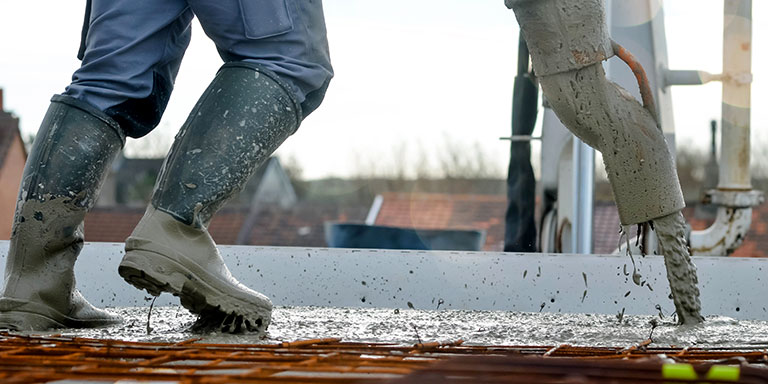
On any job site, the right gear is non‐negotiable. For professionals who put in hard work day after day, every piece of equipment matters. Your boots are the foundation you stand on, and choosing the right pair is critical for your safety, comfort, and ability to get the job done right. A quality pair of safety boots does more than just protect your feet; they support you through long shifts and demanding tasks.
This guide is built for dedicated professionals who demand performance and reliability from their gear. We understand that your work is tough, and your boots need to be tougher. We'll walk through everything you need to know to select the right safety boots for your specific industry. From decoding safety ratings and materials to ensuring a proper fit for all‐day comfort, we're committed to helping you find footwear that meets your high standards.
Understanding the Language of Safety: Protection Ratings
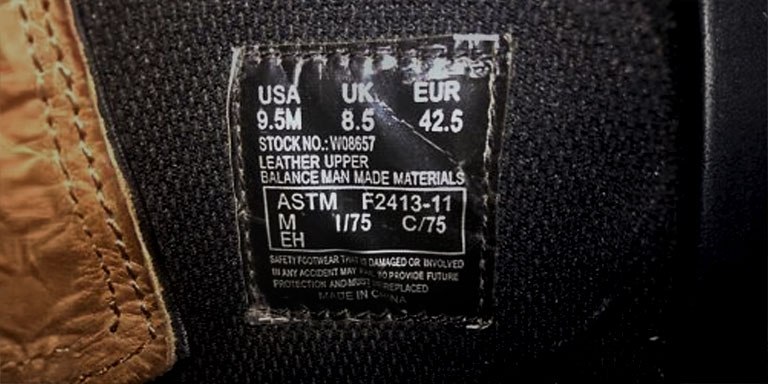
Before you can choose the right boot, you need to understand the standards that guarantee its performance. In the United States, the American Society for Testing and Materials (ASTM) sets the minimum requirements for safety footwear. These standards, specifically ASTM F2413, are recognized by the Occupational Safety and Health Administration (OSHA) as the benchmark for workplace protection.
When you look at a safety boot, you'll find a code that looks like this: ASTM F2413‐18 M/I/C. This isn't just a random string of letters and numbers; it's a summary of the boot's protective features.
Here's how to break it down:
- ASTM F2413: This indicates the boot meets the performance requirements for safety footwear.
- ‐18: This number represents the year the standard was updated. In this case, 2018
- M/I/C: This is the most critical part. It identifies the gender (M for Male, F for Female) and the specific protections offered:
- I (Impact Resistance): This rating means the toe cap can protect your foot from a 75‐pound object dropped from a specified height.
- C (Compression Resistance): This means the toe cap can withstand a compressive force of 2,500 pounds.
Beyond the primary impact and compression ratings, ASTM standards cover a range of specialized hazards. Your boot label will list additional codes for any other protection it provides.
Key Additional ASTM Ratings to Know
- EH (Electrical Hazard): EH‐rated boots are built with non‐conductive, shock‐resistant soles and heels. They are designed to protect you from accidental contact with live electrical circuits, offering a secondary source of protection on dry surfaces.
- PR (Puncture Resistance): These boots include a puncture‐resistant plate in the midsole, made of steel or a composite material. This feature is essential for workers who might step on sharp objects like nails, screws, or scrap metal.
- MT (Metatarsal Guard): A metatarsal guard offers extra protection for the top of your foot (the metatarsal bones). This is crucial in environments where heavy objects could be dropped or rolled onto the foot.
- CD (Conductive): Conductive boots are designed to dissipate static electricity from your body into the ground. They are used in highly sensitive environments where a static spark could ignite flammable materials or damage sensitive electronics.
- SD (Static Dissipating): Like conductive boots, static‐dissipating footwear reduces the amount of static electricity buildup. They offer a more controlled level of resistance than CD boots and are common in manufacturing and electronics assembly.
Understanding these ratings is the first step in making an informed choice. For a more detailed look at these standards, our complete guide to ASTM, OSHA, and ANSI provides an in-depth resource.
Built for the Job: Choosing the Right Toe Protection and Materials
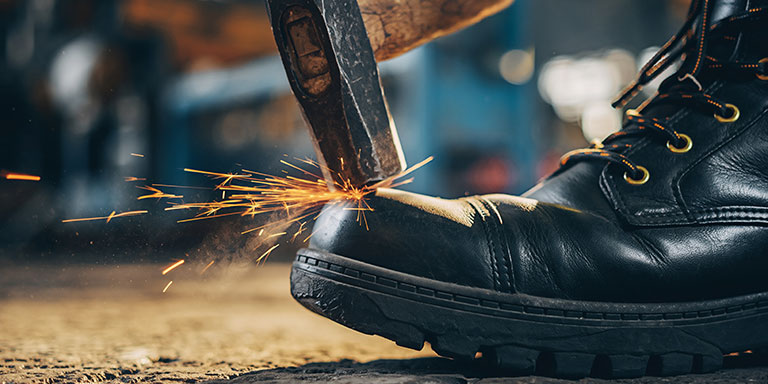
The materials a boot is made from determine its durability, weight, and suitability for your work environment. The most recognized feature is the safety toe, but the choice between steel, composite, and alloy toes depends on your specific needs.
Safety Toe Options: Steel, Composite, and Alloy
- Steel Toes: The traditional choice for safety footwear, steel toes offer maximum protection against impact and compression. They are a reliable and cost‐effective option, trusted for decades in the toughest industries. However, they are heavier than other options and can conduct temperatures, making them feel cold in winter environments.
- Composite Toes: Made from non‐metallic materials like Kevlar, carbon fiber, or plastic, composite toes are a modern alternative. They are lighter than steel, do not conduct heat or cold, and will not set off metal detectors. This makes them ideal for workers in security‐sensitive areas or those who value a lighter boot for long days on their feet. While they meet the same ASTM safety standards, they can be slightly bulkier than a steel toe.
- Alloy Toes: Often made from materials like aluminum or titanium, alloy toes offer a middle ground. They are lighter than steel but just as strong, and they can be made thinner, providing a more spacious and comfortable toe box. They are a premium option for those who want top‐tier protection without the weight of steel.
Our selection of Safety Toe Work Shoes features all three types, ensuring you can find the perfect balance of protection and comfort for your needs.
Upper Materials and Outsole Construction
The rest of the boot is just as important as the toe.
- Uppers: The upper part of the boot can be made from various materials. Full‐grain leather is the gold standard for durability, breathability, and resistance to wear and tear. Nubuck leather offers a similar toughness with a softer feel. For lighter‐duty work or jobs requiring more flexibility, synthetic materials like nylon can be an excellent choice, often combined with leather for added structure.
- Outsoles: The outsole is where the boot meets the ground. Rubber is a common choice, valued for its slip and oil resistance. Thermoplastic Polyurethane (TPU) outsoles are lightweight and highly resistant to abrasion, chemicals, and oils. For specific environments, you may need an outsole designed to be heat‐resistant or non‐marking.
A Guide for Your Industry: Matching Boots to the Job
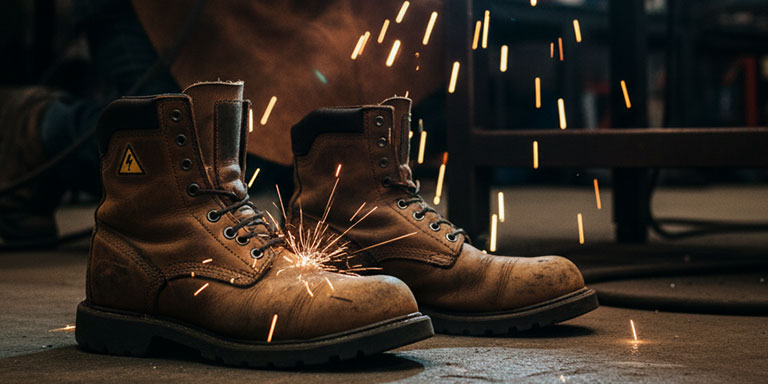
Your profession dictates the hazards you face. A boot that's perfect for a construction site may be impractical in a clean‐room environment. We honor the unique demands of your work by helping you find gear built for your reality.
Construction and Heavy Trades
Workers in construction, carpentry, and other heavy trades face a multitude of risks: falling objects, sharp debris, and uneven terrain.
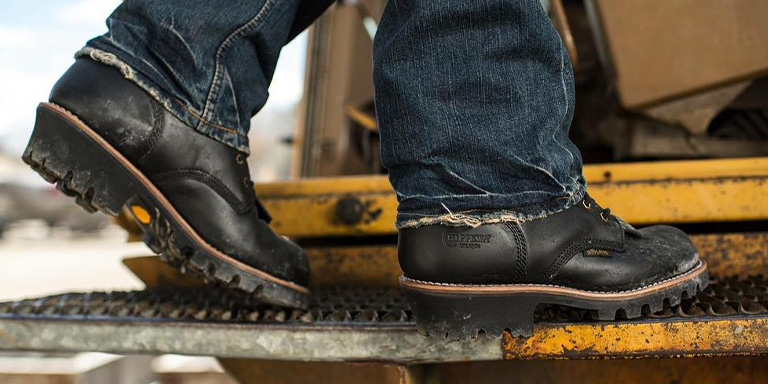
- Must‐Have Features: Steel or alloy toes (ASTM I/75, C/75) are essential. Puncture resistance (PR) is critical for protection from nails and rebar. A metatarsal guard (MT) is highly recommended for jobs involving heavy materials. Look for durable, full‐grain leather uppers and deep‐lugged, slip‐resistant rubber outsoles for traction. A Goodyear welt construction will provide durability and allow for resoling.
Manufacturing and Warehousing
Professionals in manufacturing and logistics are constantly on their feet, often on hard concrete floors. The risks can include falling boxes, moving machinery, and potential slips.
- Must‐Have Features: Electrical Hazard (EH) rated boots are a requirement. These boots must have non‐conductive soles and heels and should not have any exposed metal parts (aside from the safety toe, which is insulated from your foot). Composite toes are often preferred to eliminate as much metal as possible. A defined heel and good traction are also important for climbing ladders or poles.
Healthcare and Food Service
While not traditionally seen as "tough" jobs, these roles require long hours on your feet and present unique hazards like slick floors and biohazards.
- Must‐Have Features: Slip resistance is the most important feature. Look for outsoles specifically designed to grip wet and oily surfaces. The boots should be easy to clean and made from materials that don't absorb liquids. While a safety toe may not always be required, a lightweight composite toe can protect against rolling carts or dropped equipment without adding much weight.
Comfort and Durability: The Foundation of Performance
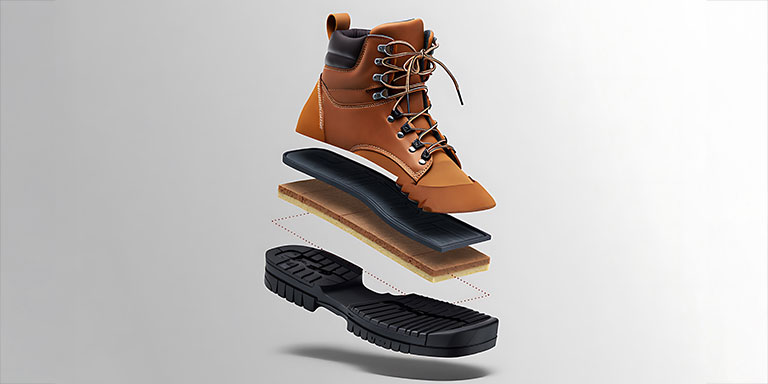
Safety boots are useless if they're too uncomfortable to wear. Discomfort leads to fatigue, distraction, and a higher risk of accidents. True quality lies in the intersection of protection and all‐day comfort.
Finding the Right Fit
A proper fit is the most important factor for comfort. Your boots should be snug but not tight. You should have enough room to wiggle your toes, and your heels should not slip excessively when you walk. Always try on boots at the end of the day, when your feet are slightly swollen. Wear the same type of socks you would normally wear to work.
If you're not sure where to start, our guide on how to choose work boots offers practical tips for getting the perfect fit.
Features That Enhance Comfort and Durability
- Insoles and Midsoles: The insole is what your foot rests on. Many boots come with removable insoles, allowing you to use custom orthotics. The midsole provides cushioning and absorbs shock. Materials like EVA or PU offer excellent anti‐fatigue properties.
- Waterproofing: For outdoor work or jobs in wet environments, a waterproof membrane (like GORE‐TEX) is essential. It keeps your feet dry from the outside while allowing moisture to escape from the inside.
- Construction Method: The way the upper is attached to the sole affects durability and flexibility. A Goodyear welt is a time‐tested method known for its durability and ability to be resoled. Cement construction is lighter and more flexible but generally less durable.
- Ankle Support: A 6‐inch or 8‐inch boot provides ankle support, which is crucial on uneven surfaces. The height you choose depends on your need for support versus your need for flexibility.
Company Compliance and Safety Programs

For many businesses, ensuring every employee has the right protective footwear is a legal and operational necessity. A standardized approach simplifies compliance and enhances overall workplace safety.
If you are a manager or business owner, implementing a corporate footwear program can be a powerful way to protect your team. These programs help you manage footwear selection, ensure every pair meets your site's specific safety requirements, and often provide cost benefits.
At WorkBoots.com, we are committed to helping you equip your workforce. Our Safety Programs are designed to make it easy for companies to provide their teams with high‐quality, compliant safety footwear. We partner with you to understand your workplace hazards and build a curated selection of boots that meet your standards, taking the guesswork out of safety for you and your employees.
Your Work Deserves the Best Protection
Choosing the right safety boot is an investment in your well‐being and your ability to perform at your best. By understanding the demands of your industry, decoding safety standards, and prioritizing a quality fit, you can find a pair of boots that work as hard as you do.
We honor the skill and dedication of America's workforce by providing footwear that is built to last and trusted on every job site. Your work is essential, and you deserve gear that meets the rugged realities of your day.
Did you find this article helpful?
-
 ASTM, OSHA and ANSI: A Complete Guide to Safety Footwear
We streamlined the complex OSHA, ANSI and ASTM safety standards into one comprehensive, easy-to-read guide.
109 others found this helpful -
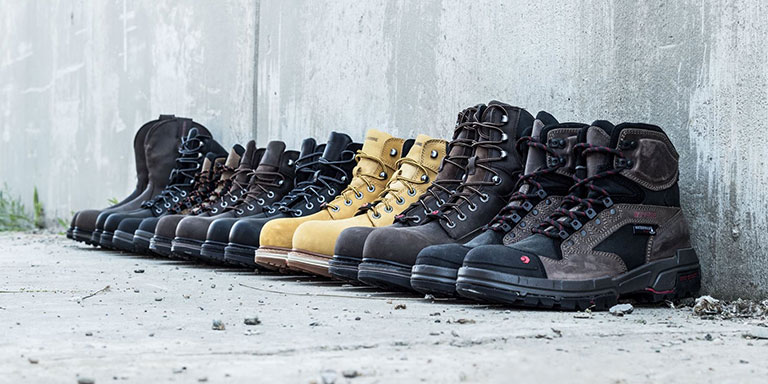 How to Choose Work Boots
We walk you through the components, features and considerations for finding the right work boots for the job.
69 others found this helpful -
 How to Choose Work Pants
We put together the ultimate resource to help you choose the best pair of work pants to wear on the job.
14 others found this helpful -
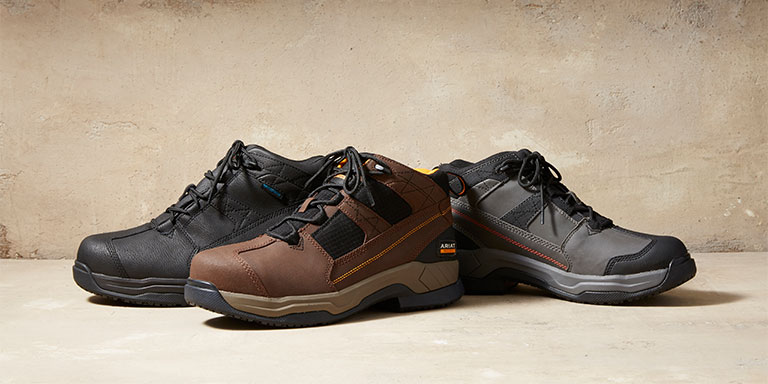 How to Choose Work Shoes
Whether you work on a construction site or in a restaurant, we’ll help you find the perfect pair of work shoes for your job.
13 others found this helpful -
 How to Choose Coveralls and Overalls
Coveralls or overalls: which do you need? Our experts cover their similarities and differences to help you pick the right style.
8 others found this helpful -
 How to Choose a Hard Hat
There are countless hazards on any job site. But, with the right hard hat, you can stay safe, well-protected and OSHA-compliant.
8 others found this helpful


