


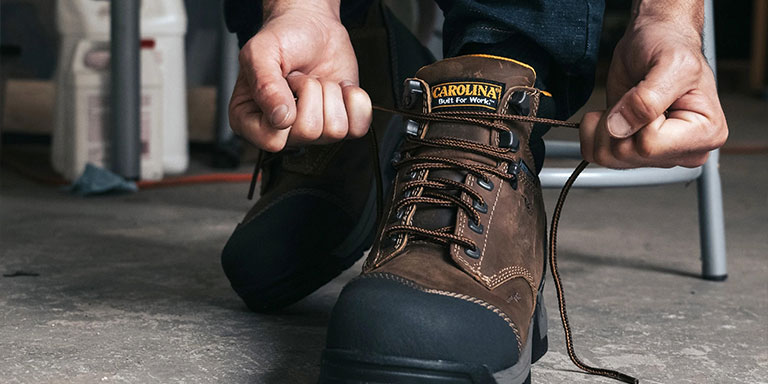
All of your footwear should be sized correctly, but when it comes to work boots, proper sizing is arguably more important than in most other cases. If your job requires any kind of specialized work boot, that's probably because the job is especially hard on your feet. Incorrectly sized work boots don't properly protect your feet from external hazards and can cause additional problems like blisters, rashes, sprains, or even fractures.
In this guide, we'll offer some tips to help you ensure that your next pair of work boots is just the right size. We'll cover accurate measurement of your feet, finding the right boot size when you're shopping online, and thorough fitting tests.
Take Accurate Measurements of Your Feet
You surely know your shoe size already, but your boot size may be a little different. Most people can wear everyday shoes that are slightly ill-fitting without any major issues, but when it comes to your work boots, there's less margin for error.
It's possible to estimate your size by standing on a piece of paper (with socks on) and carefully tracing your feet, then measuring the width and length of each foot at the widest/shortest and longest/shortest points. This method isn't super accurate, but for some people, it's close enough. This is more likely to work for you if you don't have unusually high or low arches, odd toes, or otherwise "weird" feet.
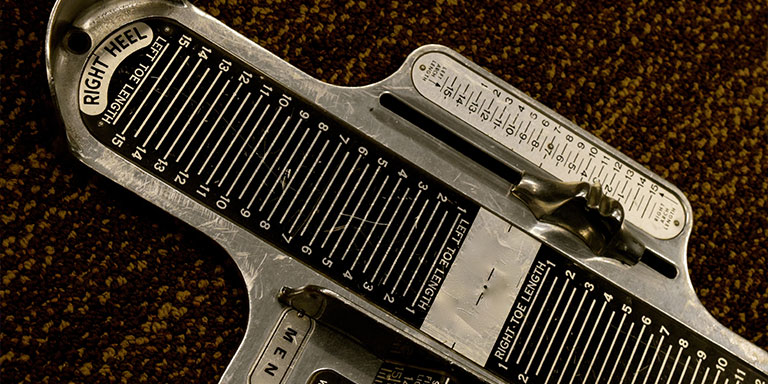
The most accurate way to measure your boot size is to use a Brannock device (those foot-ruler things you see in shoe stores and podiatrists' offices). You can visit a shoe store to have your feet measured or buy your own Brannock device. Either way, be sure to measure while you're wearing socks; otherwise, you may end up with boots that are slightly too small.
Many work boots come in narrow (N or A), wide (W or C), and extra-wide (XW, EW, or EE) sizes, at least for men. If you're a woman, or if you need an extra-specialized style of work boot, your options are likely to be limited if you wear an odd size.
In any case, your feet will probably slightly change in size over time, so it's a good idea to re-measure yearly (or at least before you buy a new pair of boots).
Tips for Buying Work Boots Online

Work boots are designed to comfortably fit as many people as possible, but no boot can be just right for everyone, even within the same size. Any two people who wear the same size will have slightly different feet, and these small differences mean that a particular pair of boots might fit one of those people perfectly but cause problems for the other. It could also be the case that slight variations between different manufacturers' equipment, measuring standards, and/or manufacturing processes produce boots that appear identical but fit differently. Moisture and temperature affect the fit of your boots as well; you may want to go up ½ size or full size if you'll be wearing your new boots in cold, wet environments (because your feet will swell, and because you'll probably be wearing thick socks(.
Be sure to browse the store website for brand-specific sizing charts. Some boot makers will state that their boots tend to run large or small and may recommend going up or down from your usual size.
We have a few more quick tips for buying work boots online:
- If you're a woman and the boot you need isn't offered in women's sizes, you can try ordering the men's boot two sizes smaller. This strategy is hit or miss, though.
- You can also try going up or down ½ size if you need a wide or narrow size that isn't available. However, this, too, is inconsistent, and you shouldn't hesitate to return boots that fit poorly. Shopping for work boots in nonstandard sizes can be frustrating—but not as frustrating as rashes, blisters, infections, or rolled ankles caused by ill-fitting boots.
- If you wear an in-between (½) size, but the boot is only offered in whole sizes, round up—never down. (Slightly oversized boots aren't ideal, but undersized boots are bad.)
- If you find boots that fit well in terms of length and width but lack proper arch support and/or don't have enough cushioning, orthotic inserts can often solve that problem.
Try Before (or Right After) You Buy
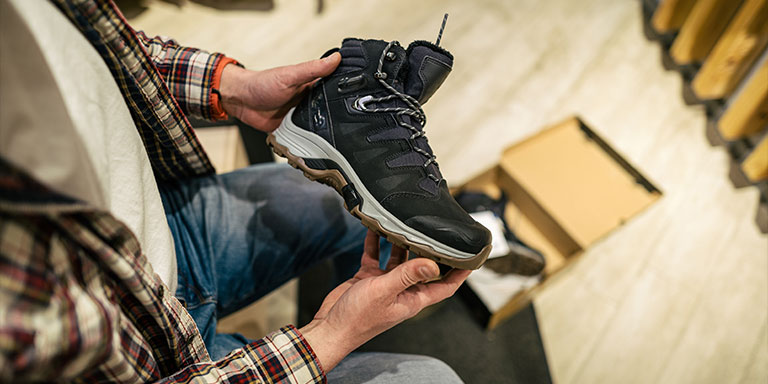
A single pair of good work boots can cost a few hundred dollars, so it's important to try them out right after buying them so that you can return if there's a problem. Here's our six-step test fit guide; the process only takes a few minutes (but it takes about an hour if you live in a cold area).
- Test the boots on a typically cold day if you live somewhere where the temperature regularly drops below 60° Fahrenheit. If that's the case, wear the boots outside for at least an hour (to give your feet time to swell from the cold).
- Wear a clean pair of the same socks you intend to wear to work.
- Put on the boots and lace them up tightly but not overly so.
- Stand against a wall and gently tap your heels against the wall, one at a time, to ensure that your heel is firmly in contact with the heel of the boot. In this position, the ball of your foot should rest comfortably within the widest part of the boot, and you should be able to wiggle your toes slightly.
- Try to slide your feet around inside the boots. You should have about ½" of movement from left to right and ¼" from front to back, although these numbers can vary by ¼" or so from one person to another. The boots should be snug but not tight.
- Walk around for a few minutes and pay close attention to your heels and toes. If your heels slide around a little bit, that's normal, and it will stop over time as the insoles mold to the shape of your feet. Significant heel slippage (more than about ½") means the boots are too big and should be exchanged. You should have enough room to move your toes, but they shouldn't press against the toe of the boot every time you take a step. Be sure to also check the fit while walking backward and sideways, especially if your job often requires you to move in those ways.
This last tip is a bit hard to quantify, but we like to use a "5%" rule for work boots, meaning: The boots should feel 95% right as soon as you put them on. Once you break them in, that should rise to 100%. But if brand-new boots feel off by more than 5%, it's probably best to try a slightly different size or model.
Work boots aren't cheap—good ones even less so. But high-quality work boots are an essential investment, especially if your job carries an increased risk of foot injuries. By setting aside a few hours for careful research, measurement, and test-fitting, you're much more likely to end up with an excellent pair of boots that will make work safe and comfortable for years to come.
Did you find this article helpful?
-
 ASTM, OSHA and ANSI: A Complete Guide to Safety Footwear
We streamlined the complex OSHA, ANSI and ASTM safety standards into one comprehensive, easy-to-read guide.
109 others found this helpful -
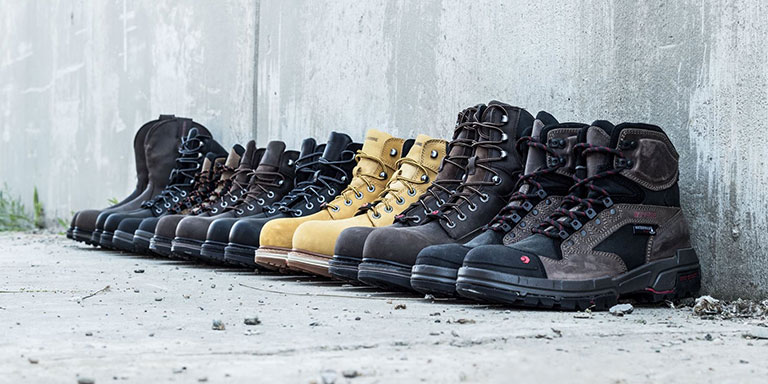 How to Choose Work Boots
We walk you through the components, features and considerations for finding the right work boots for the job.
69 others found this helpful -
 How to Choose Work Pants
We put together the ultimate resource to help you choose the best pair of work pants to wear on the job.
14 others found this helpful -
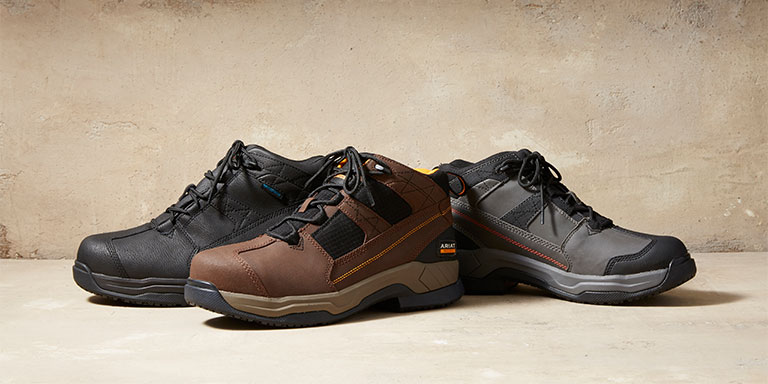 How to Choose Work Shoes
Whether you work on a construction site or in a restaurant, we’ll help you find the perfect pair of work shoes for your job.
13 others found this helpful -
 How to Choose Coveralls and Overalls
Coveralls or overalls: which do you need? Our experts cover their similarities and differences to help you pick the right style.
8 others found this helpful -
 How to Choose a Hard Hat
There are countless hazards on any job site. But, with the right hard hat, you can stay safe, well-protected and OSHA-compliant.
8 others found this helpful


