Even though technological advances and social trends are changing the employment landscape, the need for skilled tradespeople is rapidly growing. There is currently a shortage of blue-collar workers who possess a skilled trade, and this means that there is a lot of room to start earning quickly while building a stable future.
Learning a trade requires hard work and dedication, but these professions are some of the best opportunities for short and long term success. So if you enjoy working with your hands and want a career with great benefits, then consider these reasons to learn a blue-collar trade.
Solid Job Security

Skilled tradespeople who build, repair and maintain the things that make modern life possible will be valuable members of their communities for decades to come. Even though automation and AI are reducing the need for unskilled labor, there's no sign that skilled trades are in danger of becoming obsolete. It will be many years until robots can compete with the complex decision making abilities of humans, which means that they're great for mundane and repetitive tasks — but not skilled trades.
Tradespeople will remain valuable because human creativity can deal with unpredictability in ways that AI can't. As infrastructure and industry become more technical and complex, the chances of something going wrong will continue to increase. More often than not, solving these problems requires the creative thinking abilities of people over the computation abilities of machines. Therefore, as long as tradespeople maintain competitive skill sets, they will remain in-demand employees for years to come.
Skilled trades are also safe because it will be awhile before machines can match the manual dexterity of people. There are plenty of trades that require fine motor skills to do the job, and robot arms can't match the precision of human hands. For example, automotive, electrical and plumbing systems can fail in unpredictable ways, or they may need assembly that requires fine motor skills to manipulate objects and secure fasteners. Jobs like these are secure from AI and automation, and they will likely remain safe for many years to come.
It's also important to consider the fact that tradespeople manually work on physical systems within their communities, so it's impossible to outsource their jobs. As demand grows for infrastructures that make everyday life possible, trade skills become increasingly valuable and sought after by employers. The fact is that AI is reducing the need for unskilled labor, but it's proving itself to be a useful tool that can increase the capabilities of tradespeople. There's no sign of machines taking over jobs that require skill and creativity alongside manual dexterity and fine motor skills.
Hands-On Education

Just like going to college, learning a blue-collar trade isn't for everyone, but training for blue-collar trades is more affordable and accessible than a college education. One of the chief differences between white and blue-collar jobs is the level of formal education needed to break into the profession.
White-collar workers typically require — at minimum — a four-year college degree to be prepared for the social and scientific systems that they must navigate for success. But a four-year degree is not expected for blue-collar workers since their skillsets are geared towards physical systems. While academic pursuits typically hone white-collar skills, blue-collar skills are forged from hands-on experience.
The path to becoming something like an electrician, a plumber or an HVAC technician usually requires completing an apprenticeship or vocational program to gain hands-on experience. Social and scientific topics like economics, medicine and law are best learned from a college curriculum, but proficiency with mechanical and technical systems require manual interaction with them. Therefore, learning a trade requires a desire to work with your mind and your hands.
Compared to college, two-year trade schools and apprenticeship programs are cheaper, quicker and better at preparing people for their work. Vocational schools should provide job placement, and being an apprentice means that you'll have the opportunity to earn while you learn. The fact is that college is an expensive investment that might pay off, but learning a trade is an affordable and guaranteed path towards becoming a respected professional.
Even though tradespeople learn their craft on the job rather than from completing dozens of expensive college credit hours, higher education can still improve career success. For example, an auto tech who wants to become an ASE Certified Master Technician will have a more difficult journey without formal instruction from a vocational school with an automotive program.
Tradespeoples' level of success depends on their own motivation to hone their skill sets. Just note that even though a formal, two-year education isn't required to break into most trades, it is usually the best way to be competitive and master these skills.
Good Pay with Room to Grow
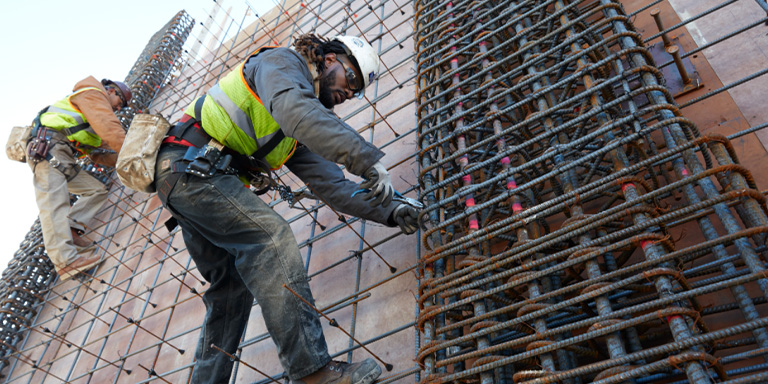
There is plenty of professional room to grow as a tradesperson. These careers create familiarity with the physics of specific technical systems, and this knowledge can be honed with work experience and advanced through higher education. For example, many people who pursue four-year civil and electrical engineering degrees start out as plumbers, electricians and welders since their hands-on understanding gives them an intellectual advantage. Plus, frugal and skilled tradespeople can easily save up enough money to pay out-of-pocket for a college education.
It's important to remember that the best-paid tradespeople aren't those who are the most educated, but rather those who are most dedicated, experienced and passionate about their work. For example, an auto tech who loves automotive culture and cars enough to tinker with them in their freetime will likely see career advancement quicker than a coworker who isn't as interested in the trade. Being passionate and dedicated opens up opportunities to learn and grow. It may also boost networking and employment prospects.
Regardless of personal interest, skilled tradespeople will gain greater financial security in a shorter timeframe than people in nearly all other professions. Blue-collar workers can expect to make somewhere between $25-$45 per hour depending on their skills, experience and profession. It should be remembered that most trades require a considerable investment in tools and equipment, but knowing how to wield them makes the investment well worth it.
Learning a trade requires hard work and dedication, but this effort pays off sooner rather than later. Since the demand for certain trades is high and growing, there are plenty of great salaries, bonuses and scholarships for those looking to enter these fields. This worker shortage gives skilled tradespeople a big advantage when negotiating their pay rate, and this advantage will only grow as infrastructures expand. As a result, learning a trade is the best option for people who are looking to get to work and make money so they can have financial security.
Personal Fulfillment
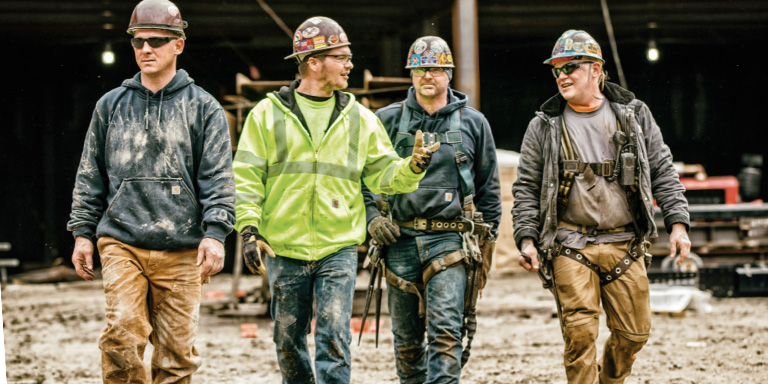
The businessperson who frequently travels for work is increasingly common, but one of the boons of learning a trade is the fact that blue-collar work is done in or around your community. This makes these trades ideal for people who want to stay close to home and family, but the high demand for skilled tradespeople also makes relocation easier than most other professions. Plus, many people who have learned a trade are often skilled enough to start their own businesses as independent contractors. Even though this path increases personal responsibility and liability, it can lead to a deep sense of personal fulfillment (as well as better pay).
Physical labor is something that can be expected from learning a trade, but the degree and difficulty will depend on the profession. At the end of the day though, most tradespeople will have something satisfying to show for climbing up ladders all day or replacing heavy, defective parts. Whether it's the feeling of pride earned from installing the plumbing in a new house or the gratification of rebuilding a truck engine, the satisfaction of completing a complex task that serves your community will create feelings of personal fulfilment.
When combined with a healthy diet, physical labor can also be a good way to get into or stay in shape. Frequently standing, stooping, lifting, reaching, crouching and crawling may be required of a tradesperson, and going home tired and dirty can be a very rewarding feeling for the right person. Most tradespeople can at least expect to stand all day, but some of the most involved (and well-paying) jobs demand workers who are willing to challenge themselves physically. There are even some employers who prepare their workers for physical strain with a group stretch before their shifts.
Regardless of physical exertion, tradespeople should always remember to take care of their bodies since they are more important than any tool. Because blue-collar trades are mainly learned through hands-on experience, it's possible to see muscle memory and confidence grow with practice. The ability to complete tasks with increasing efficiency is also something that makes learning a trade incredibly fulfilling. Plus, knowing how to do certain home repairs can save you a fortune.
Work/Life Balance

Unlike a lot of white-collar jobs, most blue-collar tradespeople have clear distinctions between personal and professional time. While it's easy for a business person to take a project home with them on their laptop, it's usually impossible to use trade skills away from the job site or shop. Of course, there are plenty of tradespeople that have personal shops set up at home, but hours spent there belong to them — not their company.
Even though there is a clear distinction between work and personal time, the chances of picking up overtime hours are high for trades like welders, machinists, painters, electricians and plumbers. It's also important to know that there are some trades that expect employees to be on-call in case of emergencies. But employers who expect personal time for their employees must clearly define these expectations, and workers can typically expect generous incentives for their time.
There are also benefits to working the clearly defined hours typical of trade professions. The fact is that people who work a set schedule with clearly defined hours are typically happier. Studies have found that those who set their own hours and work over 50 hours per week feel more of a work life balance than people who work the same number of hours on a mandated schedule. Blue-collar jobs can be demanding while on the clock, but unlike white-collar jobs, going home usually means leaving the work at the jobsite.
While it's good to leave your work at work, trade skills can come in handy during personal time for things at home. For example, meat cutters often take steaks home for dinner, just like auto techs tend to do their own car repairs and maintenance. Carpenters can repair structural damage from a storm, and the family of an HVAC tech will be thankful if the A/C goes out. Even though blue-collar workers don't typically take their work home with them, it's definitely a good idea for them to stay passionate so that their skills remain a relevant part of their lives.
Many unskilled blue-collar jobs are being lost as society changes and automation increases, but the good news is that there is a soaring need for tradespeople to install, repair and maintain our increasingly technical society. Besides openings from new technology, there are still plenty of traditional blue-collar trades that desperately need hard workers who are eager to grow into a rewarding career. It's a great idea to look into apprenticeship and vocational schools if you are someone who enjoys solving problems with their hands and could benefit from finding their path in a blue-collar trade.
Did you find this article helpful?