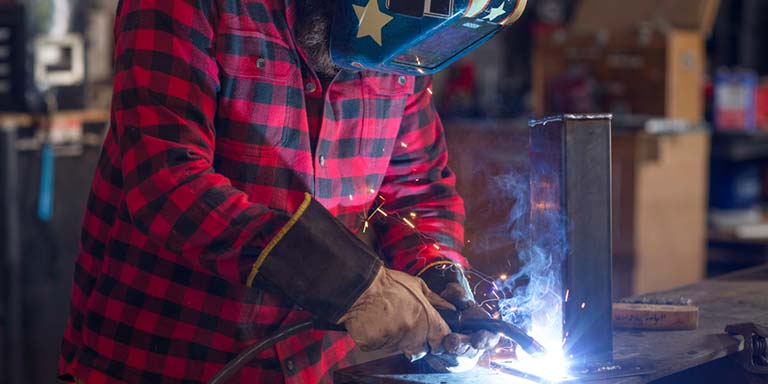
Welding is a process that melts metals in order to join them together. It's not about merely filling a gap between two objects like soldering, but rather melting the metals until they combine to make one piece. If you are new to welding there's a lot to learn. There are multiple techniques, specialized equipment and important safety considerations to follow. We put together this beginner's guide to cover everything you need to know to get started.
Four Methods of Arc Welding
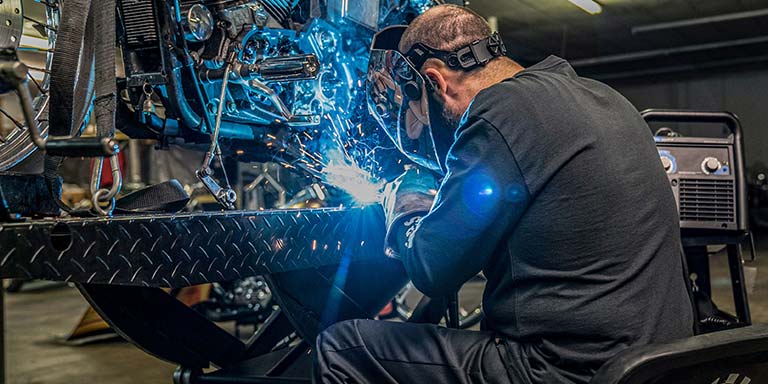 Arc welding uses electricity to heat metals to their melting points. The arc is created by a power source that runs through the welding device, or electrode. Arc welding uses either AC or DC currents and employs electrodes that are either consumable or non-consumable. There are four basic types of arc welding: metal inert gas (MIG) welding, tungsten inert gas (TIG) welding, flux-cored welding and stick welding. Each one requires different skills and experience.
MIG Welding
Metal inert gas (MIG) welding, also known as gas metal arc welding (GMAW), is the best type of welding for beginners to try. Some of the equipment you'll need to for MIG welding includes:
MIG welding machine with trigger-activated gun
Power source
Shielding gas canisters
Electrode wire appropriate for the metals being joined
MIG welding uses electricity to create an extremely hot arc that melts the wire and both pieces of metal. The electrode wire is called a filler metal, since it combines with the other metals during the welding process. This makes welding different from soldering, because soldering only melts the filler wire and not the base metals themselves.
To avoid contamination from airborne elements, arc welding requires a gaseous shield around the welding area. The gas shield usually consists of CO2 and argon, but other gasses are used to keep the melted metals from reacting with oxygen, nitrogen and other contaminants. The gas is dispensed from the welding gun when the trigger is pulled so that the arc, gas shield and wire feed commence in sync.
Since arc welding uses electricity, the welder must maintain proper voltage to avoid creating either pooling globs (when the voltage is too high) or cold stacking (when the voltage is too low). Finding the sweet spot for your project may take a little bit of trial and error; just keep in mind that different materials have different voltage recommendations. Remember too that welding with proper voltage means you should hear a sound like bacon cooking, not popcorn popping.
TIG Welding
Tungsten inert gas (TIG) welding, also known as gas tungsten arc welding (GTAW), uses a welding machine that includes a welding torch and a foot pedal to control the electrical current. TIG welding uses electricity to create an arc hot enough to melt metals, but it is unique in that it produces temperatures hot enough to join metals without using a filler wire. This method typically employs a non-consumable electrode, meaning that the tungestion rod does not melt like a flux rod (more on that below). Filler wire can be used, but this requires feeding it into the weld pool with the hand that is not wielding the torch. TIG welding requires a great level of skill and precision; it's definitely not for beginners.
Flux-Cored Welding
Also known as flux-cored arc welding (FCAW), this process is similar to MIG welding in that it uses a welding machine with a gun. But unlike MIG welding, flux-cored welding doesn't require the use of shielding gas since the flux-core wire creates its own gas when heated by the arc. Flux-core wire is pricey, and investing in a MIG setup (with gas) is financially comparable. The biggest drawback to flux-cored welding compared to MIG welding is that the former is messier. It is, though, ideal for outdoor and windy conditions since it doesn't require a gas shield that might be blown away.
Stick Welding
Also known as shielded metal arc welding (SMAW), stick welding uses a power supply to send a current through a flux-coated metal filler rod called the stick. The power supply creates an arc by using the stick as an electrode to transfer a current, and a gas shield forms from the melted stick as it creates a bead. Unlike TIG and MIG welding, stick welding can be done in the wind since there's no worry about a gas shield being distorted. Stick welding requires less skill than TIG welding (but more than MIG welding), so it's not ideal for beginners.
Welding Safety Equipment
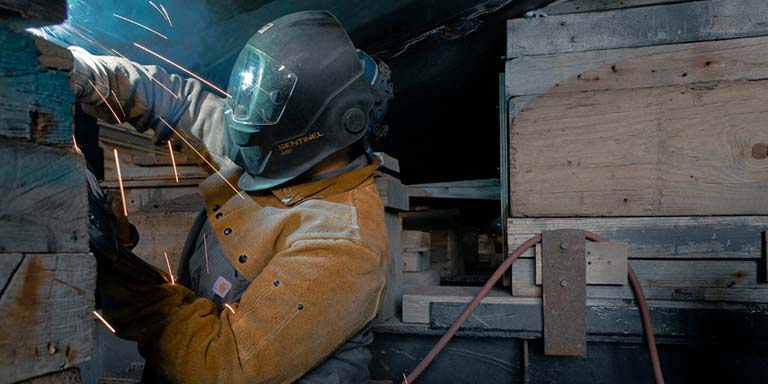
Welders must wear proper safety equipment, including flame-resistant clothing and protective gloves, to prevent burns and injuries from sparks and heat. Durable, heat-resistant work boots with metatarsal protection are essential to shield feet from falling objects and molten metal. Consider enrolling your company in our Corporate Safety Programs for work footwear, apparel and equipment from leading manufacturers.
Welding Supplies and Other Considerations
Choosing a Welding Machine
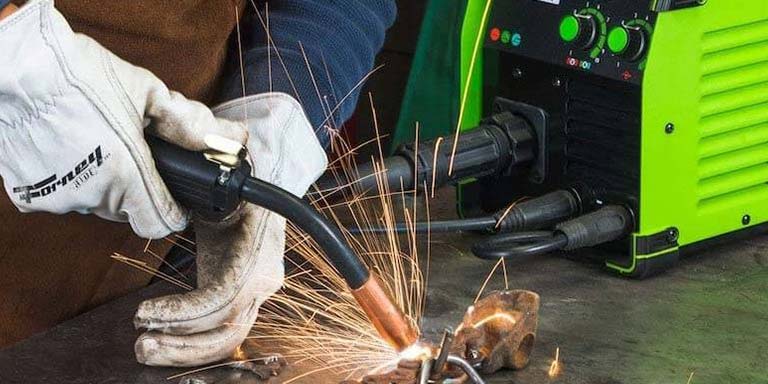
Picking out a machine may be the most important consideration for beginners, so make sure you're getting the right welder for you. There are multi-process welders that can be used for all four basic types of welding, so one of these might be a good investment if you plan on working your way up to TIG welding. Flux-cored welding machines are the most affordable which makes them attractive options for beginners, but remember that MIG welding is the way to go if you're a novice. As with any high-powered device, always read the owner's manual before using your welding machine.
Preparing Your Work Surfaces
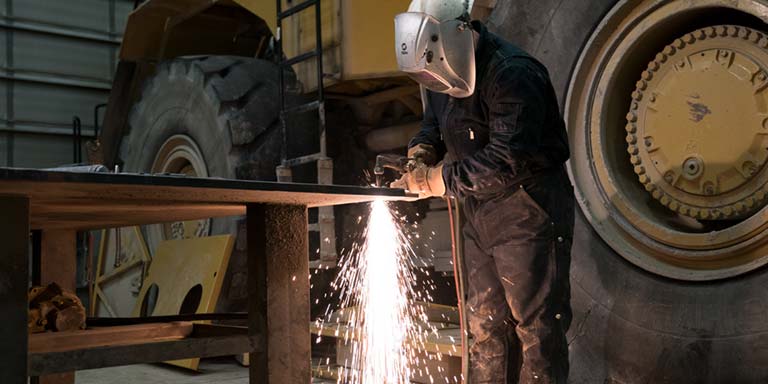
Before any actual welding takes place, it's crucial to prepare the materials being joined by following these steps:
Clean the surfaces with acetone
Use aluminum oxide sandpaper to clean away rust and paint (a coarser grit will leave scratches)
Use a wire brush and/or an angle grinder to remove any contaminants
If welding aluminum, clean with acetone again
Be careful when using chemicals to avoid combustion and flames, and never weld wet metal. Also remember to ground the weld by creating a circuit between the welder and the workpiece using a grounding clamp.
Different Types of Welding Beads
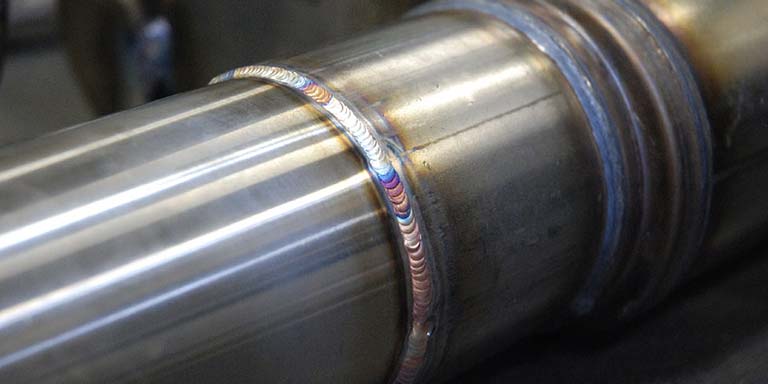
The seam where metal has been melted to join it together is called a bead, and the bead's shape is determined by the amount of side-to-side movement the welder makes. Beads can be either narrow or wide.
Stringer beads push or drag the slag in a straight line with little to no side-to-side movement. Dragging creates deeper penetration, so this method makes better welds. Pushing is best for heat-sensitive materials and vertical joints. Wide beads, on the other hand, are best for fat joints, since the increased side-to-side motion controls the heat of the weld pool.
If you are a beginner welder (or you're looking to become one), remember that there are plenty of vocational schools that will teach you all you need to know to become a professional. It's important to practice in order to hone your skills. If you keep at it, though, you'll be a proficient welder in no time.
Did you find this article helpful?