


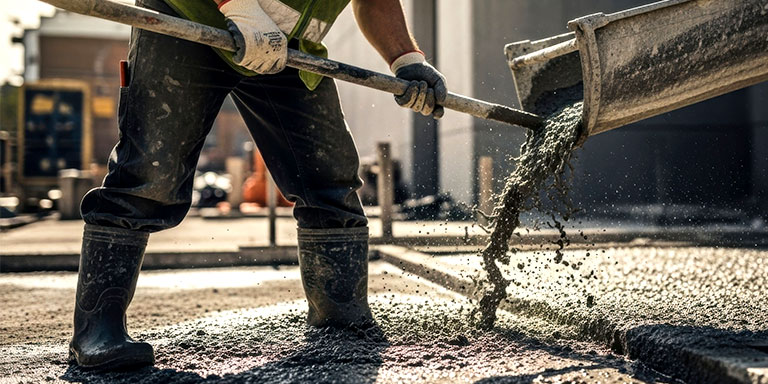
We all know that proper workplace footwear is essential for preventing injuries, but most of the common talking points are ones we've heard many times.
In this guide, we'll review some of the real but lesser-known ways in which choosing the right work boots can save you a lot of pain, money, and hassle. We'll explore the true costs of injuries that may seem minor as well as some not-so-obvious ways in which poor-fitting or damaged boots can cause major problems. We'll also address the common misconception that all work boots are more or less created equal, and we'll discuss how the psychological impacts of inappropriate footwear can, in some cases, cause serious physical injuries.
There's (Almost) No Such Thing As a "Minor" Foot Injury
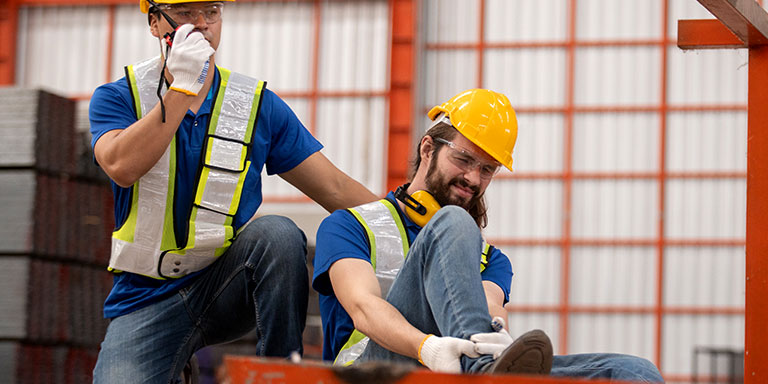
To be fair, trivial wounds such as blisters and small cuts rarely turn into anything serious. However, there is another category of foot injuries that seem trivial but aren't. Tradespeople often take thousands of steps per shift, and many foot injuries that seem insignificant at first can incapacitate workers for weeks or months if not taken seriously and treated proactively. A few examples:
- Rolled or sprained ankles often heal quickly if given immediate and adequate rest but can worsen dramatically if you "just push through it."
- Minor fractures of the heel, ankle, or toes can cause lifelong deformities and gait problems if not given enough time to heal properly. (You might be surprised at how often tradespeople ignore broken bones because "it's not that serious.")
- Any injury that breaks the skin can lead to nasty‐potentially even life-threatening‐infections if not treated appropriately.
In short: All foot injuries require prompt and medically appropriate treatment. Contrary to the idea that such treatment leads to "lost productivity," it's almost always better for both the employee and the business in the long run.
Of course, prevention is even better than prompt treatment‐which is why it's so important to choose work boots that are well suited to your needs and work environment.
The Understated Causes of Foot Injuries in the Workplace
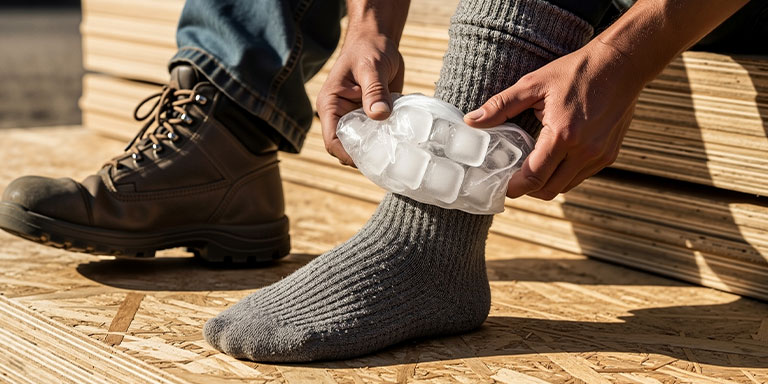
Safety briefings and case studies often highlight the worst-case scenarios: a two-ton beam dropped on your foot or total degloving. These are real and serious risks, but the majority of workplace foot injuries are much less dramatic, which makes it easy to underestimate them.
Some of the most common (and insidious) workplace injuries include:
- Slips and falls caused by seemingly minor (or even unnoticeable) damage or imperfections in your footwear, such as cheap outsoles that gradually separate from the midsole over time or don't provide traction appropriate for the terrain.
- Secondary injuries (subsequent, often more serious conditions that arise after and as a result of a prior injury). For example, minor injuries to the ankle or heel can change the way you walk, and even if these changes are temporary, they can cause other, more serious problems in your hips, knees, or back.
- Microtrauma, which is akin to chronic muscle or tissue fatigue caused by small vibrations or shocks that recur frequently over time (think walking on concrete or climbing many stairs). Tissues fatigued in this way are more susceptible to other injuries.
- Wear injuries such as plantar fasciitis and Achilles tendinopathy, both of which can be caused and aggravated by boots that fit poorly or don't have enough cushioning.
Even the best and most well-made work boots won't last forever. Be sure to inspect your footwear often and repair or replace it as needed. Your body will thank you (and so will your wallet, in the long run).
Fit: The Most Important (and Most Overlooked) Safety Feature
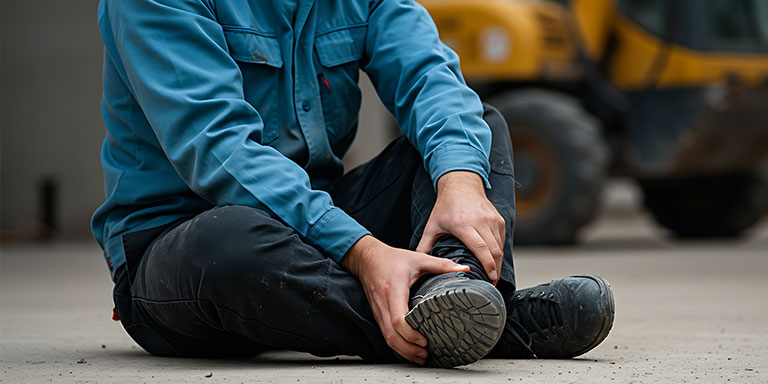
There's an old saying: "Good enough usually isn't." This saying certainly holds true in the world of workplace footwear. Work boots that fit "well enough" may be reasonably comfortable, and they may prevent injuries, but the better your boots fit, the more protected you are.
One of the most common problems caused by ill-fitting boots is called a "compensatory injury," which, as the name suggests, occurs when you experience an injury because of moving your body in an abnormal way to compensate for some other problem. The human body evolved to stand, walk, bend, and lift in very specific ways, and even minor deviations from these norms can cause serious issues‐especially in your feet, which bear the weight of your entire body. Ill-fitting boots can cause any number of problems elsewhere in your body that range from mild to severe. A few more examples:
- Tightness in the toes causes numbness‐and possibly permanent circulatory or nerve damage over time.
- Oversized boots or loose heels lead to impeded balance, and your ankles become more susceptible to injury as they try to compensate for increased muscle tension.
- Boots that fit well in the morning may fit poorly in the evening or vice versa because your feet can swell or shrink throughout the day, especially over the course of a long shift or in places where temperature and moisture are extreme or highly variable.
When you buy new work boots, be sure to test them out thoroughly in conditions and environments that mimic your workplace as closely as possible. Never accept "close enough" when it comes to proper fit.
Choosing the Right Soles: The Importance of Tread and Traction
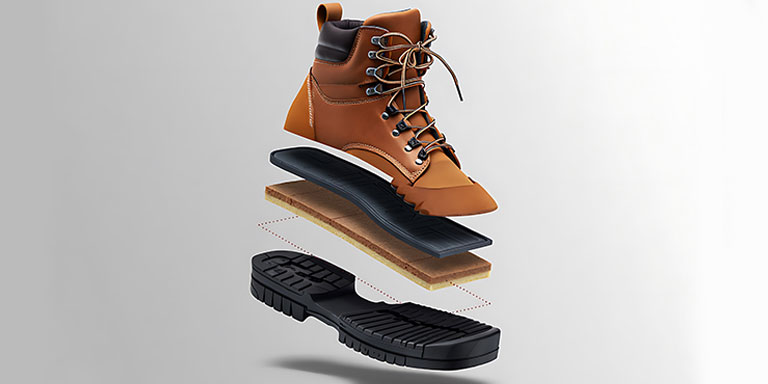
No two pairs of work boots are created equal, and this is arguably most true (and most important) when it comes to the materials and design of outsoles. Here, we're focusing primarily on slip resistance because slips and falls are among the most common workplace injuries. For example, one study by the Liberty Mutual Research Institute suggests that worn tread alone can increase fall risk by up to five times.
Not all work boot soles perform equally well on all surfaces in terms of traction or slip resistance. Here are our top tips for honing in on the best materials and designs for your workplace. (These recommendations are broad and general, and they're only meant to serve as starting points for your own research.)
Outsole Material Choice
Rubber outsoles are generally best suited to workplaces in which the terrain is flat and even. Most rubber compounds score well for slip resistance in oil and water. Soft rubber soles are better for improved grip on slightly uneven or textured surfaces, whereas hard rubber is often the better choice for abrasion resistance.
Thermoplastic Polyurethane (TPU) outsoles are resistant to cuts, abrasions, and many common industrial chemicals. They tend to hold up well on concrete and metal, but TPU is a relatively hard material, so comfort and impact resistance may suffer to some extent.
Polyurethane (PU) is light, tough, and more comfortable than TPU (but less so than rubber for many people). It's popular among tradesmen who walk a lot every day but don't face many other foot hazards. It's also less abrasion-resistant, so your boots may need to be resoled or replaced more often.
Hybrid outsoles are less common but may be exactly what you need. For example, some work boots feature PU outsoles covered by an outer layer of rubber for both durability and slip resistance.
Midsole Material Choice
One of the midsole's most important functions is to further absorb and redistribute impact force before it reaches your foot. Again, small differences in fit or construction can result in major health impacts over time. If you stand or walk a lot during every shift, you'll likely want to opt for PU or EVA (ethylene-vinyl acetate) midsoles because they earn high marks for shock absorption and comfort (provided you have adequately cushioned insoles).
Poor shock absorption in and around the midsole often causes back, knee, or hip pain that gradually worsens over time and can become debilitating if untreated. Fit is another important consideration, especially with respect to the arch and heel. From safety toe work boots to soft toe work boots, they should provide adequate arch support for your foot anatomy and should fit snugly (but not tightly) in both the toe and heel.
One final note: Improper arch support caused by a midsole design ill-suited to your foot may or may not be solvable with insole inserts. We recommend shopping for work boots with midsoles well-suited to your foot while reserving arch-correcting insoles as a backup option.
Insole Material Choice
The primary job of the insole is to maximize comfort while minimizing additional stress on your joints, muscles, and tendons. It's somewhat uncommon for factory insoles to fit your feet perfectly; you'll likely need to invest in gel or foam inserts. Here, too, you may need to experiment; not all insoles work the same or feel the same. Insole choice is, for many, the most subjective element of overall boot comfort, so don't be afraid to experiment until you find insoles that are just right for you.
If out-of-the-box insoles aren't cutting it, consider custom orthotics. They're more expensive and may require a prescription, but with proper care, they should last many years and many pairs of boots.
Other Considerations

Cuts, sprains, and fractures aren't the only kinds of workplace foot injuries. In many trades, water, temperature, electrical hazards, and chemical exposure are serious concerns. It's important to be aware of safety footwear regulations to avoid these hazards. For example, waterlogged feet can develop serious infections, especially in cold weather. Here are our quick tips for preventing other kinds of injuries:
- Waterproofing: Choose full-grain leather (the only material that can be easily re-waterproofed) or synthetic materials designed for water resistance, such as Gore-Tex. Keep in mind that waterproof boots reduce airflow and cost more, so only buy them if you truly need waterproof protection.
- Insulation: Like waterproofing, insulation is something you should get only if necessary. Heavy boots naturally warm your feet, but both cold and overheating can be issues. Insulated boots are ideal if you work in temperatures below 50°F/10°C or in wet environments that are slightly warmer.
- Chemical, Oil, or Heat Exposure: If your job exposes you to oil, extreme heat, or corrosive chemicals, inspect your boots regularly for any signs of damage. Even well-made, chemical-resistant boots will eventually degrade.
- Electrical Hazards: If electrical hazards are present in your workplace, ensure that your boots are EH-rated under the ASTM (American Society for Testing and Materials) F2413 standard.
Psychological Costs Can Become Physical Costs

The second most important "F" (behind "fit") is "fatigue," which is a serious but underemphasized risk in many trades. Here, we're referring not only to the sensation of feeling tired but also muscle and joint fatigue, which can exist (and can cause serious health problems) even if you don't feel them.
In short: Cheaply made or ill-fitting boots almost inevitably cause chronic muscle and joint fatigue over time‐and fatigued muscles and joints can be dramatically more susceptible to injury. Well-made work boots that fit well don't only prevent injuries directly‐they also reduce conditions (like fatigue) that make injuries more likely.
There's one more angle to consider: general fatigue. The wrong boots are likely to make you feel tired in general (because your body is having to work harder or less efficiently than would otherwise be necessary), and general fatigue impairs cognitive function in many ways‐all of which increase injury risk for yourself and others.
Final Tips
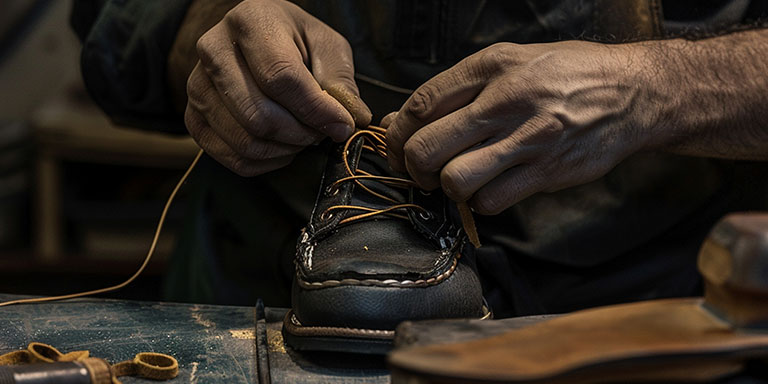
In closing, let's briefly review our best and most valuable suggestions for preventing foot injuries at work.
- Measure twice, buy once. Take your time to learn how to properly size work boots before buying a new pair. A carefully chosen pair that fits well will protect you (and your coworkers) best.
- Consider seasonal variables. Depending on where you work and what you do, you may need different boots for different environments or times of year. Here, too, be sure to choose each pair carefully and test them thoroughly.
- Verify fit and function right after buying. Most boot retailers have return and exchange policies that are fair but not unlimited or open-ended. Many tradespeople have been injured by boots that were not well suited to their needs because they were stuck with those boots after missing the return window.
- Saving money tomorrow may require spending more today. It's tempting to save money by buying a cheaper pair of work boots, but are they really cheaper if they need to be replaced twice as often (or if they put you in the hospital)?
- Regular maintenance is key. Minor damage or wear can often be repaired inexpensively and easily if you catch it before it turns into a major problem. We recommend carefully inspecting your work boots at least every three months‐more often if your job is particularly hard on them.
Thousands of workplace injuries occur every year as a direct result of damaged, inappropriate, or ill-fitting PPE; it's clear that choosing the right work boots is an important process that should be taken seriously. We hope that this guide has helped you sharpen your thinking with respect to some of the lesser-known ways in which footwear plays a major role in workplace safety.
If you have further questions, please don't hesitate to reach out. Our customer support team is always ready to help.
Did you find this article helpful?
-
 How to Work Safely in the Heat
A guide on how employers and construction workers can work together to keep the jobsite safe during periods of extreme heat.
16 others found this helpful -
 How to Choose a Hard Hat
There are countless hazards on any job site. But, with the right hard hat, you can stay safe, well-protected and OSHA-compliant.
8 others found this helpful -
 How (and Why) to Set Up a Safety Boot Program for Your Employees
In this guide, we’ll explain what safety boot programs are, their many benefits, and how to start one for your company.
2 others found this helpful -
 What to Look for in A Boot Program
Set up your ideal work boot program with our advanced guide. Get questions to ask vendors & tips tailored to your team.
1 other found this helpful -
 Everything You Need to Know About the WorkBoots Corporate Safety Program
In this guide, we’ll explain how our Safety Program gets your team the right gear fast and easy
1 other found this helpful -
 How to Choose Safety Boots for Colder Weather
Find the best insulated, waterproof safety boots for winter. Stay warm, dry, and protected on any cold job site.
1 other found this helpful


